
The Studio:
Some problems ask us to think differently. Others ask us to work differently together.
Every problem has an architecture.
We stay with healthcare’s hardest problems long enough to understand what keeps producing them.
Healthcare is full of people working hard to make things better. Yet some of its most persistent problems remain stubbornly out of reach.
Not because people don't care, or because they aren't trying. Sometimes the problem is bigger than any one person, organization or perspective can see.
The Studio creates space to explore these problems together.
We bring people with different experiences, responsibilities and perspectives into conversation. We look beneath the familiar explanations, explore the conditions shaping what happens, and experiment with possibilities that might not otherwise emerge.
We don't arrive with predetermined answers. We start with something worth being curious about.
A thought experiment
Think about a traffic intersection.
One obvious problem is that people don't always stop at red lights. So we respond with bigger lights, more signs, cameras, enforcement and penalties. Better signals in the hope of producing better behaviour.
But what if we looked at the problem differently? The possibility of running a red light is built into an arrangement that organizes movement around stopping and going.
A roundabout creates a different arrangement. It isn't rule-free. But instead of relying on everyone stopping and waiting for permission to move, it asks people to pay attention to one another, negotiate their entry and adjust their movement in relation to what's happening around them.
Same traffic. Different architecture. Different possibilities.
Healthcare has its own intersections: where clinical practice meets organizational priorities, where patient experience meets policy, where professional judgement meets institutional rules, and where individual needs meet systems designed to serve populations.
These intersections are often where things become difficult. They are also where new possibilities can begin to emerge.
A different way of working together.
The Studio isn't a consultancy arriving with a solution, or a training program offering a method to follow. It's a space for collective inquiry and experimentation.
We bring people together around problems that resist conventional solutions. Working across experiences, disciplines and organizational boundaries, we make room for different ways of seeing, question familiar assumptions and explore what becomes possible when people begin to work together differently.
Depending on the inquiry, this might involve:
Seeing more: Developing a richer understanding of what's happening and what might be sustaining it.
Thinking together: Bringing different experiences and perspectives into relationship.
Recognizing our part: Exploring how we participate in the systems we are trying to change.
Trying something different: Experimenting with new possibilities in practice.
Sometimes this begins with a conversation. Sometimes it becomes a deeper inquiry, a collaborative design process or an experiment in practice.
The work takes shape around the problem and the people who come together to explore it.
Your Problem Architects & Solution Designers
Mark Stolow / For 25 years, I've worked at the intersection of healthcare, human experience and complex systems. As a problem architect and creative solution designer, I challenge how problems are framed, uncover the dynamics that sustain them, and help imagine new possibilities. My work is about creating pathways forward by revealing possibilities that weren't visible before.
Arno Terra / With over 20 years of experience in care innovation, evaluation and system transformation, I work with lived experience and stories to understand complex challenges. My approach draws on social complexity, complex adaptive systems, developmental frameworks and the Ethics of Care. Across diverse care settings, I champion the knowledge of patients, citizens, families and professionals, believing all voices matter. I am particularly interested in how we make meaning together and cultivate new ways of caring with.
Who is The Studio for?
The Studio is for people who sense that something isn't working as it should, and who are curious about what might become possible if they explored it with others.
You might be…
◉ Working in healthcare
You’re navigating the distance between what people need and what systems allow.
◉ Leading an organization
You’re finding that familiar approaches aren't shifting a persistent problem.
◉ Representing a community
You’re wondering whose experiences are heard but rarely change the conditions producing them.
◉ Working in policy, industry or research
You’re wondering what you're missing by looking at the problem from within a confining frame.
Things we're curious about
Healthcare offers no shortage of problems. We're particularly interested in those that persist despite good intentions, significant resources and repeated attempts to solve them. These are some of the inquiries we're exploring.
-
Access to Treatment
What happens when everyone is doing their part, but people still aren't getting the treatment they need?
Access to treatment involves pharmaceutical companies, regulators, payers, healthcare providers, patient organizations and, ultimately, people waiting for care. Each encounters a different part of the problem.
We're curious about what becomes visible when these perspectives come together.
How might we better understand the gaps between treatment availability, reimbursement decisions, care pathways and people's actual experiences?
Who might join the conversation: People working in pharmaceutical access, public and private reimbursement, healthcare delivery, policy and patient advocacy.
-
Communication in Healthcare
What gets lost when people try to communicate through roles, routines and expectations?
Healthcare depends on communication. Yet some of the most important things people know about their own experiences are difficult to express, hear or act upon.
We're curious about what happens when people have the opportunity to encounter one another differently.
What stories rarely get told? What becomes possible when patients, caregivers, clinicians and organizations listen beyond the usual boundaries of their roles?
Who might join the conversation: Patients, caregivers, clinicians, patient experience leaders, educators and healthcare organizations.
-
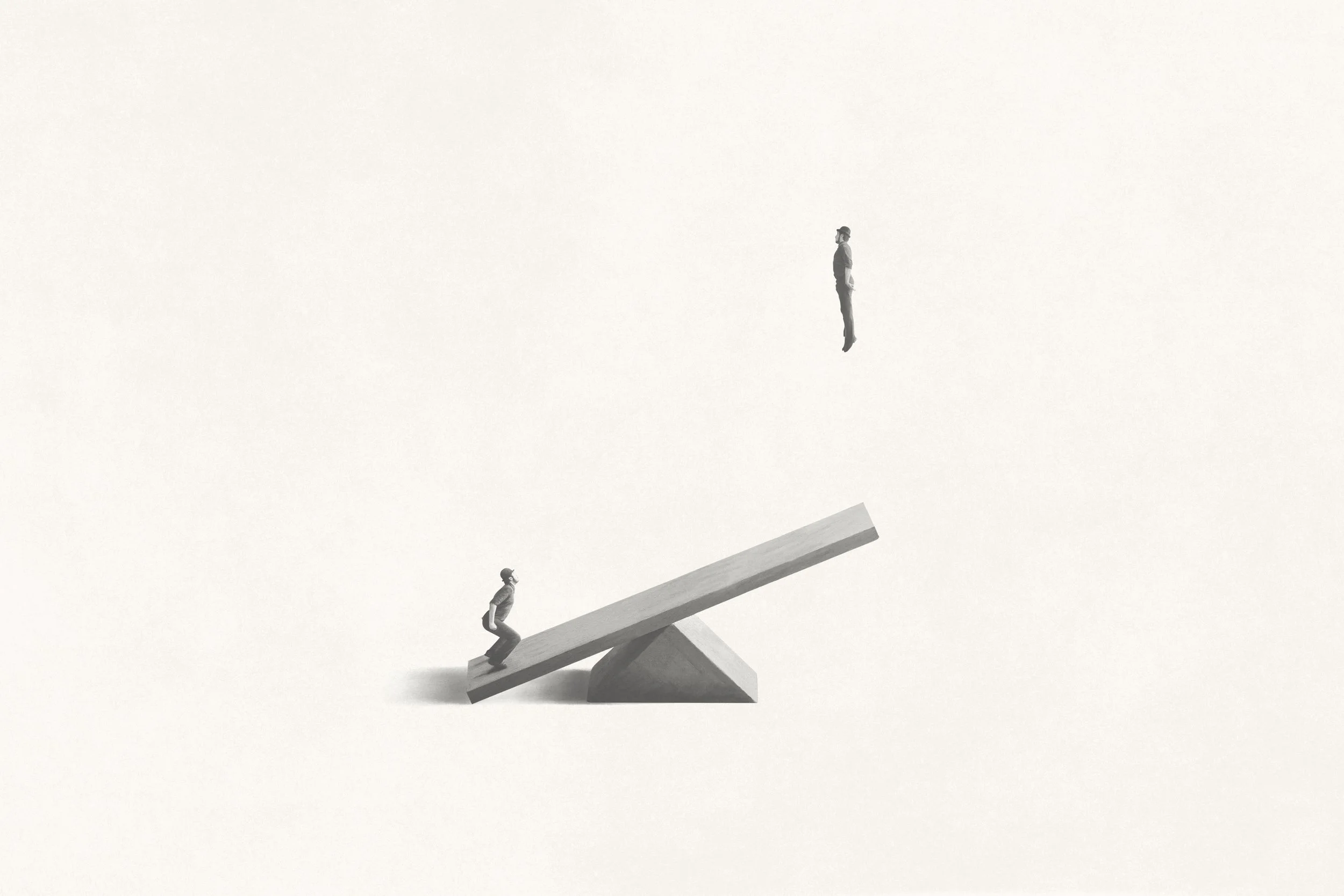
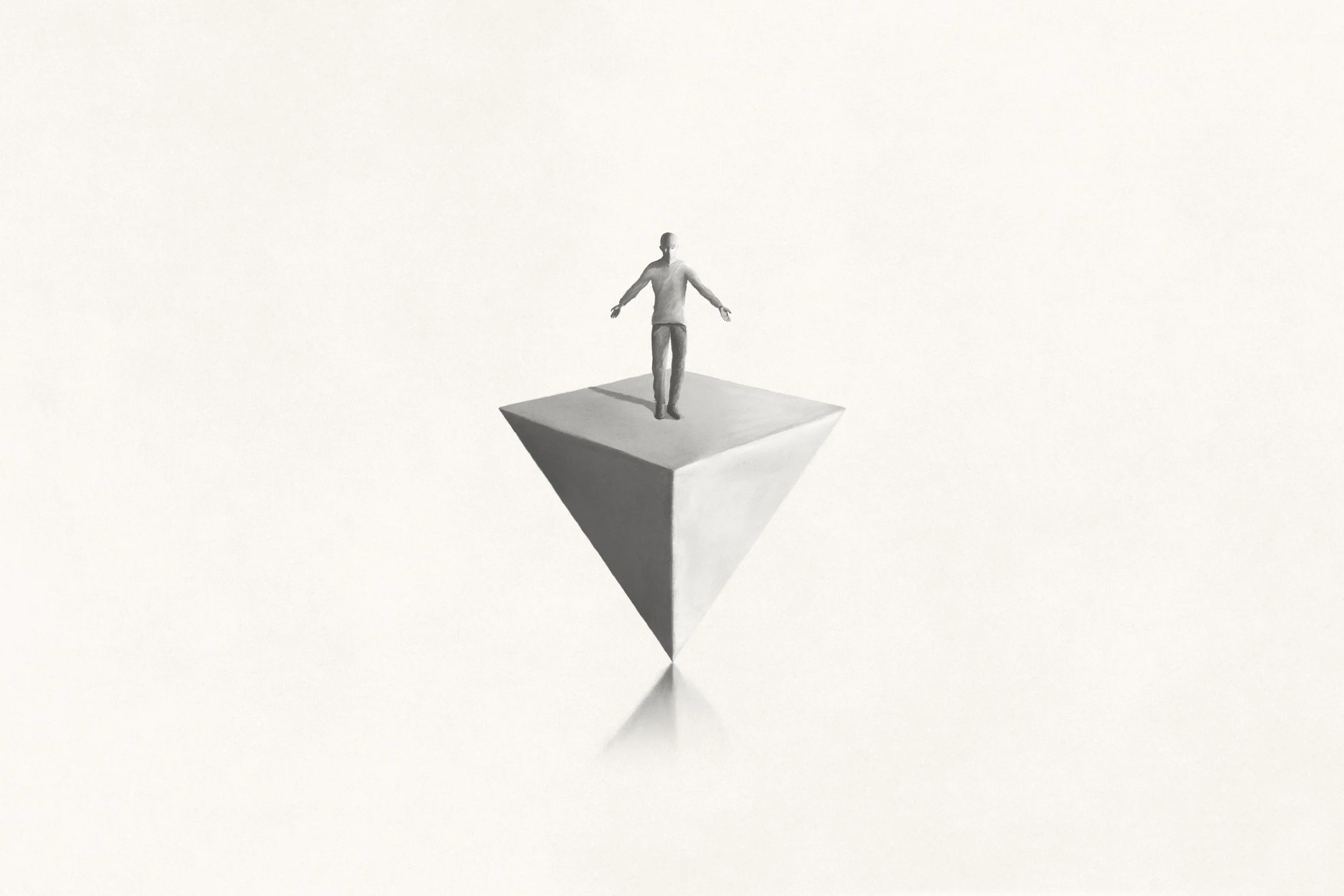
Moral Distress
What if moral distress is telling us something about the systems in which people work?
Healthcare professionals regularly encounter situations where they know what is needed but cannot make it happen. We often respond by focusing on individual resilience, wellbeing and coping.
But what if we looked upstream?
What conditions repeatedly place people in situations where they cannot act in accordance with what they believe is right? What might moral distress reveal about the organization of care itself?
Who might join the conversation: Healthcare leaders, clinicians, professional associations, organizational development teams and people working on workforce wellbeing.
-
AI and the Human Side of Care
What happens to the relationship at the heart of care when AI joins the room?
AI is already drafting notes, flagging risk and answering patients' questions. Most of the talk is about accuracy and efficiency, and developers, clinicians, leaders and patients each see only part of it. Less attention goes to what changes between people: who gets trusted, what gets handed off, and what judgment fades or deepens.
We're curious about…
What kind of partnership are we building between people and AI, and who gets to shape it?
Who might join the conversation: Clinicians, patients, caregivers, health leaders, AI developers, ethicists and regulators.
There is something we could explore together.
Some of the hardest problems in healthcare persist despite the commitment, intelligence and effort of the people working on them.
Perhaps we're looking in the wrong places. Perhaps we're seeing only parts of something that can only be understood together.
The Studio creates space to explore these questions with people who experience them from different places in the system.
You might bring a problem, a perspective, a frustration, or simply a sense that something could be different.
We don't need to know where the conversation will lead. We just need something worth being curious about.
Let's start here.
Tell us what you're seeing, what you're struggling with, or what you'd like to explore. An initial conversation is just that: a place to begin.