
The Studio:
Every problem has an architecture
We stay with healthcare’s hardest problems until the underlying system comes into view, then work with you to design what comes next.
What kind of world keeps producing this problem?
Healthcare keeps adding better signals: another protocol, another metric, another intervention. Yet, the same problems surface because they’re built into how the system is arranged. Stay with a problem long enough and it reveals that arrangement; the relationships, assumptions and contexts that shaped it. When you begin to see those complex relationships, the problem becomes a doorway into something new.
A thought experiment
Think about a traffic intersection.
One obvious problem is that people don’t always stop at red lights. So we add enforcement: bigger lights, more signs, cameras, penalties. Better signals in search of better behaviour.
But there is something more curious to notice. The possibility of running a red light is not an accident of the architecture. It is a property of it. Where movement is organized through stop and go, someone will eventually ask what happens when the signal is ignored.
A roundabout creates a different world. It isn’t rule-free; its rules simply live in different relationships. There is no single moment when everyone is asked to stop and wait. Movement is negotiated: who is coming, who is entering, who is yielding, who is already there.
Same traffic. Different architecture. Different possibilities.
How The Studio works
We begin by understanding the problem
Problems are easy to name and hard to change. Perhaps those are connected.
Look from other angles. What becomes visible through different lenses? We draw on an ecology of tested methods and disciplines.
Listen to the people inside it. Patients, caregivers, clinicians, and decision makers and the world they live in, not just what they say about the problem.
Widen the field. What else is holding this problem in place? Where is the friction, and where is the possibility?
Then we ask what else is possible
Once the architecture is visible, we can loosen our grip on the world as it is.
Rearrange the elements. What new relationships, forms of care and kinds of participation open up?
Grow a more ecological world. How might it become more attentive to the relationships it’s part of, and more in service to what it shares?
Build for change. We don’t design a world once and for all. We help create ones that sense, respond and keep renewing themselves.
Problem Architects & Solution Designers
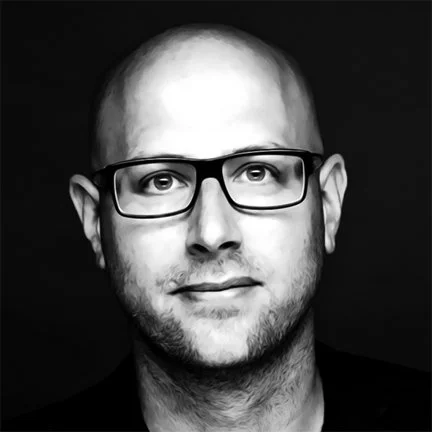
Mark Stolow / For 25 years, I’ve worked at the intersection of healthcare, human experience, and complex systems. As a problem architect and creative solution designer, I challenge how problems are framed, uncover the dynamics that sustain them, and help imagine new possibilities. My work is about designing ways forward by revealing undiscovered worlds.
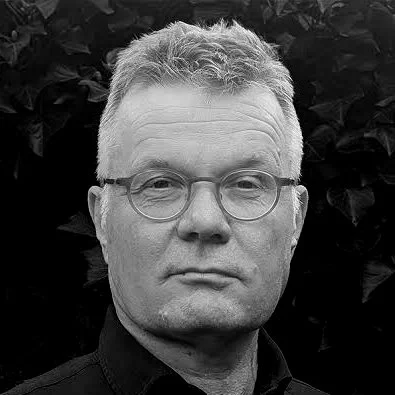
Arno Terra / I am change management expert and narrative researcher working on organizational issues in healthcare and the social domain.
What changes through our work?
◉ Active intelligence
Organizations get better at sensing change and responding before problems feel intractable. We don’t prescribe answers. We support capacity to robustly keep adapting.
◉ Collective intelligence
People see together what no one can see alone. We surface difference and tend the seams between perspectives so new pathways can take shape.
◉ Reflexive intelligence
Seeing our part in a problem’s architecture, including the assumptions, habits, and roles that hold it in place, helps us stop being obstacles to solving it.
◉ Practical intelligence
After sensing the problem and surfacing insight, we practice possibilities, nudging the system toward new worlds one thoughtful step at a time.
Real-world problems we’re exploring
-
Access to Treatment
When a medicine moves from approval into everyday care, it passes through many parts of the health system. Regulators assess safety and effectiveness. Payers consider costs and value. Clinicians make treatment decisions. Patients and families navigate the services, appointments, costs and practical demands involved in receiving care. These parts of the system are closely connected, but decisions are often made separately. We see in this gap an opportunity.
The question is not only whether a medicine works or whether its cost represents value. It is also what needs to be in place for its benefits to reach people in everyday life. We are bringing people together to explore how reimbursement decisions and care pathways can better support those conditions.

-
Communication in Healthcare
Most of the communication between patients, families, and healthcare professionals is focused on specific goals and shaped by established roles, expectations, and defined systems of care. As a result, many experiences and perspectives go unheard. That got us wondering: What would happen if we surfaced the stories people don’t usually get to tell? What would a different kind of listening look like, not focused on gathering facts or solving problems, but on understanding one another more deeply and stepping into each other’s worlds?
What would happen if people listened to each other with renewed curiosity? What would they learn about each other? What new understandings could emerge? What could these conversations reveal about communication in healthcare, and about new possibilities for care. We are creating space to explore these and other questions together.

-
Moral Distress
A village sits beside a river. One morning someone notices a person struggling in the current and pulls them to safety. Then another appears, and another. Soon the whole village is on the riverbank, working in shifts, training new people, getting very good at the rescue. Yet the rescuers are exhausted. Some start staying home. A few leave the village altogether. The village does the sensible thing: it starts counting how tired people are. One evening a rescuer asks a different question. Instead of “How do we pull people out faster?”, she asks, “How are they ending up in the river in the first place?” She walks upstream. What she finds isn’t a villain. It’s a broken bridge, a path with no railing, and a crossing everyone had stopped noticing.
Healthcare professionals experiencing moral distress are the rescuers. They can see what should happen for the person in front of them, but the system around them makes it hard to act. We’ve started to count the exhaustion, the absences, and the departures. This inquiry invites us to walk upstream together.
